Nomenclature & Synonyms
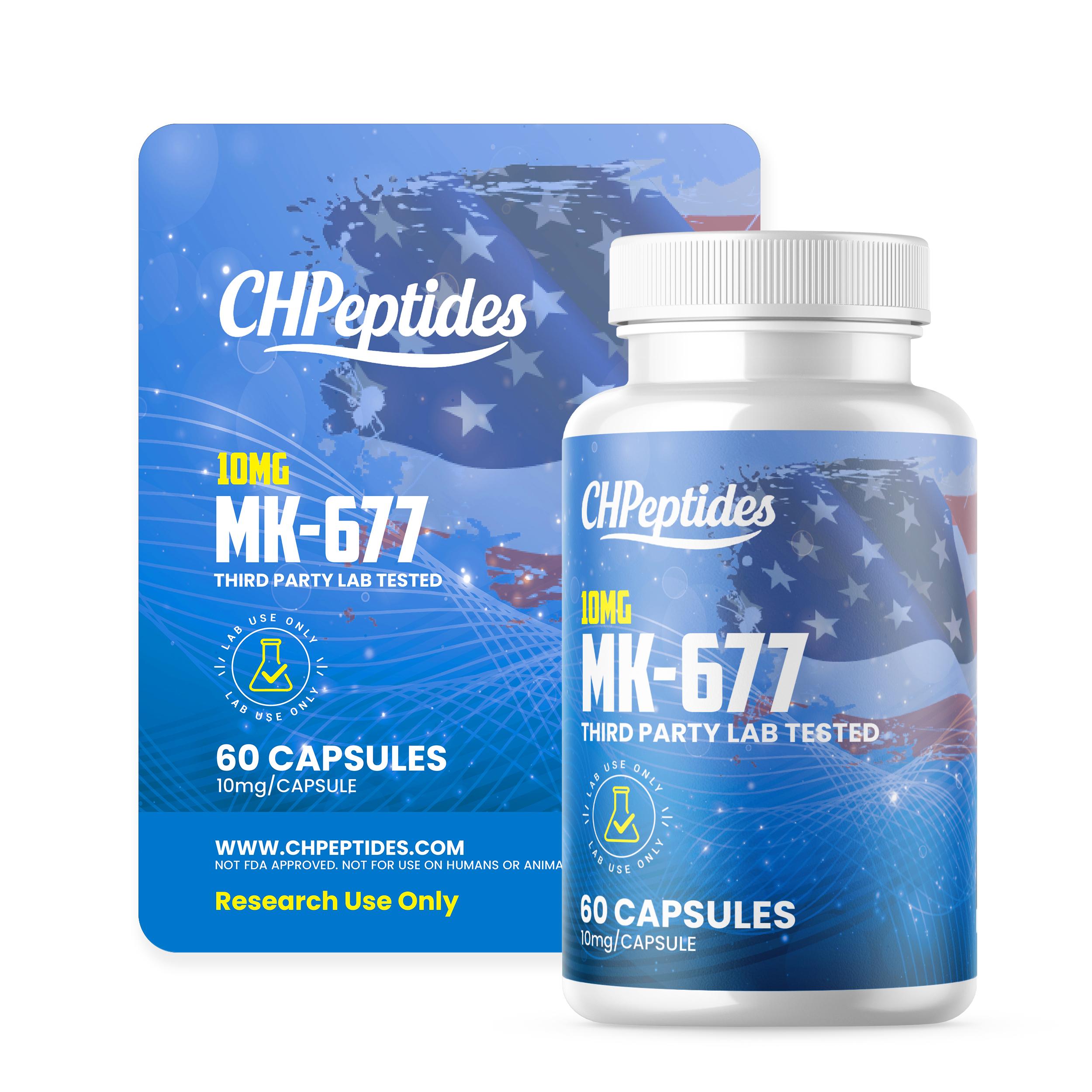
MK-677 is also known as Ibutamoren or L-163,191 and was developed by Merck & Co. The full chemical name of MK-677 is (R)-1'-(2H-indazol-3-yl)-N-((1-(4-methylbenzyl)piperidin-4-yl)methyl)methanamine.
Structural Characteristics
MK-677 is a small molecule, not a peptide, so it does not have an amino acid sequence. It is structurally characterized by its methanamine backbone and an indazole ring, which is crucial for its binding affinity and activity.
Molecular Pharmacology
MK-677 acts as a potent, non-peptide, orally active agonist of the ghrelin receptor, also referred to as the growth hormone secretagogue receptor (GHSR). It stimulates the secretion of several hormones including GH and IGF-1, mimicking the natural hormone ghrelin. The binding leads to activation of associated signaling cascades such as the G-protein coupled receptor-mediated pathways, and AKT/PI3K pathway. Specific EC50 values are documented in pharmaceutical literature indicating its high efficacy, but these values vary based on experimental conditions.
Research Applications
- First synthesized in the early 1990s by scientists at Merck & Co, Ibutamoren has been extensively studied in terms of its effects on growth hormone secretion.
- In vitro studies have demonstrated that MK-677 can increase prolactin levels and other anabolic hormones in animal models.
Technical Properties
MK-677 has a solubility at 1 mg/mL in DMSO and is furthermore soluble in ethanol and PEG400. For research applications, it is typically reconstituted in DMSO and diluted in relevant aqueous solutions before in vitro use. As a lyophilized compound, it exhibits stability under controlled room temperatures and should be stored away from direct light. When reconstituted, it is recommended to store the solution at -20°C to maintain stability.
Compliance
For laboratory research use only. Not for human or veterinary use. Not intended for diagnostic, therapeutic, or preventive applications.